For decades, Johnny Carson was the undisputed king of late-night television. As the longtime host of The Tonight Show, Carson entertained millions with his quick wit, effortless charm, and remarkable ability to make every guest feel at ease. But beyond the celebrity interviews and comedy sketches, he had another gift that audiences admired just as much—he knew how to recognize talent when he saw it.
Over the years, countless comedians, musicians, and entertainers received career-changing opportunities after appearing on Carson’s stage. A successful appearance on The Tonight Show could introduce an unknown performer to millions of viewers overnight. Yet one of the most fascinating stories associated with Carson didn’t begin backstage or in a dressing room. It began with a simple question directed at the studio audience.
During a live taping, an unexpected situation reportedly left the show in need of a pianist. Whether due to a scheduling issue or another unforeseen circumstance, Carson turned toward the audience and asked a question that seemed almost casual:
“Does anybody here play the piano?”
Most people probably assumed he was joking.
Others likely looked around, waiting for someone else to respond.
After all, volunteering to perform live on national television with no rehearsal and no preparation would terrify almost anyone.
Then one man quietly raised his hand.
The audience chuckled.
Some people smiled, believing the moment was simply another one of Carson’s playful bits. Even Carson appeared curious about whether the volunteer truly possessed the confidence his raised hand suggested.
Rather than dismissing him, Carson invited the stranger onto the stage.
As the man walked toward the piano, the atmosphere inside the studio shifted. The laughter faded, replaced by anticipation. Millions of viewers at home had no idea what they were about to witness.
There would be no second chances.
No practice session.
No opportunity to start over if things went wrong.
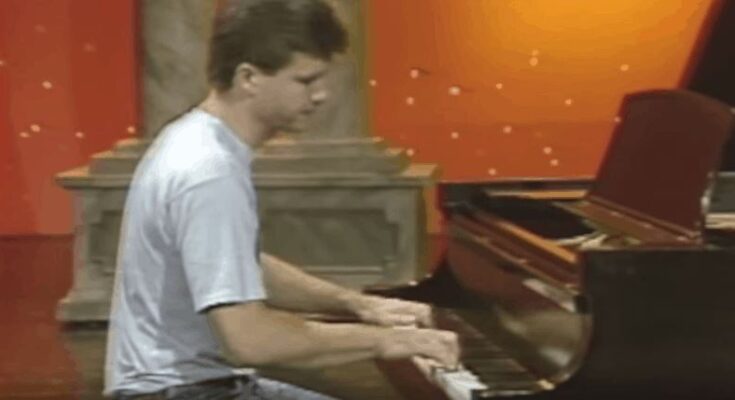
The stranger sat at the piano, adjusted the bench, placed his hands over the keys, and took a quiet breath.
Then he began to play.
From the very first notes, it became clear this was no ordinary audience member.
His playing was confident, expressive, and technically impressive. Every melody flowed naturally, revealing years of practice and dedication. The audience, which had moments earlier laughed at the unlikely situation, fell completely silent.
Within seconds, surprise gave way to admiration.
People smiled.
Some leaned forward in disbelief.
The show’s orchestra watched with genuine appreciation.
Carson himself appeared delighted by what he was hearing.
What started as an unexpected request had become one of those magical television moments that simply couldn’t be scripted.
When the performance ended, the studio erupted into thunderous applause.
The stranger received a standing ovation from people who had known nothing about him only moments before.
Carson congratulated him warmly, recognizing not only his remarkable talent but also the courage it had taken to volunteer in front of millions of viewers.
That brief appearance became far more than an entertaining segment.
It became a turning point.
Stories like this remind us that life-changing opportunities often appear without warning. Rarely do they arrive after careful planning or perfect timing. More often, they come disguised as ordinary moments requiring immediate decisions.
In this case, the opportunity arrived as a single question.
The difference between remaining anonymous and becoming unforgettable came down to one simple choice.
Raise your hand—or don’t.
What makes this story especially inspiring is that the man’s success wasn’t created in those few minutes on stage. His performance reflected countless unseen hours spent practicing the piano long before anyone was watching.
While audiences saw only the final result, they didn’t witness the years of discipline that made the moment possible.
Preparation had quietly laid the foundation for opportunity.
Without those years of dedication, raising his hand would have accomplished nothing.
The story also highlights one of Johnny Carson’s greatest qualities as a television host. He possessed an extraordinary curiosity about people. Rather than limiting attention to famous guests, Carson often found ways to involve ordinary individuals in the show. He understood that remarkable talent could come from unexpected places.
That willingness to trust an unknown audience member created a moment viewers would remember for years.
It also reinforced Carson’s reputation as someone who genuinely enjoyed discovering new talent.
Throughout his career, many entertainers credited Carson with giving them their first major break. A successful appearance on The Tonight Show frequently led to new opportunities, larger audiences, and flourishing careers. Carson’s influence extended far beyond comedy, shaping the careers of performers across many fields.
The stranger at the piano became another example of that legacy.
His story carries an important lesson that extends beyond music or television.
Every person spends years developing skills that often go unnoticed.
The opportunity to demonstrate those abilities may not come today—or even tomorrow.
But when it finally arrives, preparation matters.
So does courage.
Many people possess extraordinary talent yet hesitate when opportunity appears because fear convinces them to stay silent.
This man chose differently.
He trusted his preparation.
He accepted uncertainty.
He stepped onto the stage despite having every reason to remain seated.
That single decision changed the direction of his life.
Whether in music, business, sports, or everyday life, success often belongs to those willing to act when unexpected opportunities arise. We rarely know which moment will become the one that changes everything.
For one ordinary audience member, it wasn’t months of planning or years of networking that transformed his future.
It was a simple question from Johnny Carson.
One raised hand.
One unforgettable performance.
And one reminder that sometimes the biggest opportunities in life begin with the courage to say, “Yes, I can.”